
Darius Beckford glanced at the wall clock. Its hands moved – slowly, relentlessly. He pushed back from the desk, rubbed his eyes, and muttered under his breath. Hours spent staring at notes and evidence. Absolutely nothing.
Realizing the day had gone nowhere, Beckford shoved the scattered papers back into the case file and snapped it closed. This damned murder case had landed on his desk because the train had stopped in his city. The engineer complained about the brakes. When the conductor went to check on the passengers, he found the body.
Edward “Eddie” Carver had been a wealthy businessman. Where’d the money come from? Not his concern. All he needed to figure out was who, among the train’s passengers, hated Carver enough to kill him.
Everyone aboard, passengers, conductor and steward included, had alibis for the time of death. They vouched for each other. It was maddening. Beckford wanted to send them off, but that would leave the case unsolved. He couldn’t stomach that.
He rolled his shoulders. His back cracked. He needed air. Definitely a smoke. Sleep wouldn’t help — maybe a drink would. Inspiration might strike. The case file slid into his briefcase, ready to frustrate him further.
He stood and pulled his trenchcoat from the rack. Briefcase in one hand, he waved at the other police detectives and beat cops before stepping outside.
The air outside was dirty, just like the city. Street sweepers hadn’t been by. Trash overflowed the corner bin.
He fished a cigarette from his pocket, lit it. Inhaled. Smoke filled his lungs, then a cloud drifted around his head.
Which way to the Pub? Somewhere on the way home, when he could find it. A night like this, a case like this? The Pub would be there. A mystery like this? It wouldn’t want to miss it. And neither would he.
Cigarette finished, he tossed it to the sidewalk and ground it under his shoe. One more for a city filled with smoke and trash.
He walked two blocks in the direction of home. A rented room. So small he could touch both walls with elbows bent. A bed and a dresser — he didn’t need more.
Abruptly, he turned the corner. He could feel it. It was this way. It called to him. The shuttered storefronts didn’t matter. One more block and there it was. An ornate wooden door—out of place in the city, yet exactly where he needed it to be.
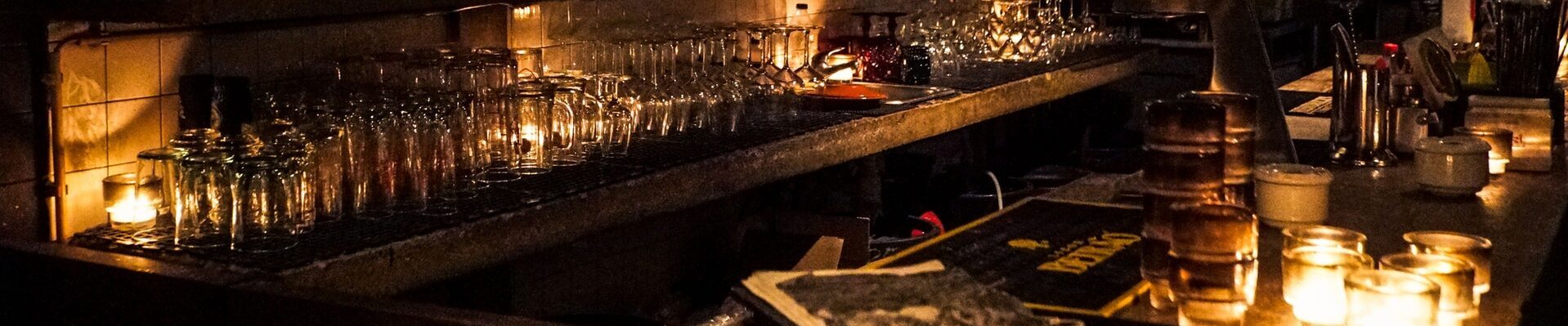
Pushing the door open, he stepped inside. It was almost as dark as outside. Small lights flickered over the tables and the bar. Behind the bar stood a man in a white shirt and a waistcoat, with sleeve garters, polishing a glass beer mug—timeless details Beckford always appreciated.
“Welcome, Darius. I had a feeling we might be seeing you today.”
This place he’d entered? The Nowhere Pub.
What is the Nowhere Pub? It’s a pub that doesn’t belong anywhere—or -when. Multi-dimensional. Crosses time and space.
Try to imagine the Pub. Conjure from the deepest recesses of your mind the darkest, seemingly most unfriendly, not-where-you-belong pub. Magnify that several times. You might come close to the interior of the Pub.
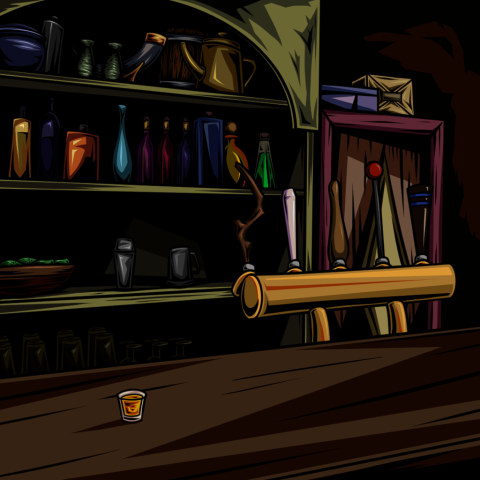
What’s on the inside? Tables scattered across the barely-visible floor and along the edges. Flickering lights hover over each table and the bar. Not candles. Just lights. The room is dim, lit by a glow that isn’t natural, but is ordinary for here.
Behind the bar: taps for beer and ale; all unlabeled, just blank wooden pull-levers. A wall of bottles, labels either missing or impossible to read.
The one constant fixture?
The Bartender. Cheerful, dignified, precise, polishing glasses and mugs when not serving a drink.
What’s the allure of the Pub?
Plenty. Any drink that exists, somewhere or somewhen, is available. Name a beer—they’ve got it, and it’s on tap. Pick a vintage liquor—there’s a bottle, open, waiting to pour a shot. Insist on a cocktail no one else would want? The Bartender will craft it, perfectly, every time.
The clientele?
All sorts. A barbarian fresh from an icy tundra; a petty thief on the run, seeking refuge; a starship captain waiting for his ship to be fueled.
This is where they go to have a drink, or five, and relax.
The Pub is where stories are swapped. Just don’t start a fight. You’ll get one warning from the Bartender that he’ll call the Bouncer to put an end to it. That always settles the point.
What’s really special about the Pub?
Two types of customers. Regulars and One-Timers.
Which type are you? You don’t know until you try to find the Pub again. Regulars? They’ll always find their way back. And when they open the door to leave, they’re going back home.
One-Timers? One chance. No one else opens the door to leave? They go home. They go through someone else’s door? They’re lost and never going home again.
Why do people come to the Pub? They need a drink. They need to hear, or tell, some stories. Maybe they need someone to consult with.
No matter what, the Pub is always an interesting place to visit—if all you’re doing is visiting.
Closing the door behind him, Beckford steps to the bar.
“He’s here tonight, isn’t he?”
The Bartender lowers the already gleaming mug. “Of course he is. That’s why you’re here as well, isn’t it?” He tilts his head toward a side table.
Beckford looks in that direction. Behind the table sits a tall, gaunt man. Even in the dim light, the man’s eyes are sharp, focused on Beckford. On the table: a pipe, an odd cap, and a small flower-like glass, already-empty.
Beckford nods to the man, then turns back to the Bartender.
“I need a drink. And he looks like he needs a fresh one as well.”
“Your usual Red Herring Reserve whiskey? Single or double tonight?”
“Double. Neat. I need something uncomplicated.”
“Of course, sir. And I’ll prepare another Analytical Green for the gentleman.”
The Bartender slides a large shot glass onto the counter. He pulls a bottle from behind him, tilts it, and an amber stream flows from the nozzle, filling the glass without a single drop wasted.
Returning the bottle, the Bartender places a flower-shaped glass on the counter. Then, a bottle filled with bright green liquor is slowly poured into the glass—a precise amount even without measuring. The small glass shimmers giving off its own faint glow, trying to push back the darkness.
A slotted spoon is placed on the glass, with a small white cube in the center.
“Sugar, for the absinthe, sir,” he says as an explanation.
Taking a small pitcher with crystal-clear water from under the bar, the Bartender allows a single drop to fall on the cube, slowly dissolving some before descending to the absinthe below. As the sugared water mixes into the glass, the clear liquid turns a milky white, glowing brighter—a light shining, guiding the way.
The Bartender continues this slow process until the sugar has disappeared, then lifts the spoon.
“Your drinks, sir. I’m certain the gentleman will be happy for you to bring his to him.”
Beckford grunts as he lifts both glasses. He hates the ritual involved, but it’s a necessary payment for the assistance of seated man.
Beckford places both glasses on the table: the shot glass on his side, the flower-like glass in front of the other man.
“Darius. Good to see you here. I had hoped for some company.” The man shifts slightly in his seat. “Tell me you’ve brought me something for my endless boredom?”
Beckford studies the seated man. Alaric Carroway—a self-described “consulting” detective. Never carried a badge, never walked a beat. Yet somehow able to solve the unsolvable.
“Yeah. Got something for you to chew on.”
Seating himself, Beckford pulls the file from his briefcase and places it on the table.
Carroway lifts the delicate glass and takes a sip. He leans forward slightly, tense—a predator poised to pounce on the file, waiting until invited. Ritual is everything, after all.
Beckford slides the file across the table.
“I’ve been staring at everything and can’t figure this one out.”
Without hesitation, Carroway lowers the glass and opens the folder. In a heartbeat, he flips through every page. His eyes are alight, taking in every word.
Beckford downs his whiskey in an instant.
“Dead guy. No one could’ve killed him. Makes no sense.”
Carroway lifts an eyebrow in response.
He sets aside the notes and interview statements, and focuses on the photographs of the crime scene.
“Every time I see them, I’m astonished by the clarity of the images you have. Such precision. Such … detail.”
The pictures are lowered and returned to the neat pile of notes.
“You missed what was staring you in the face, detective.”
“So what did I miss?” Beckford growls.
He hates the teasing—but it’s part of the ritual as well.
Carroway plucks a photograph from the pile and places it delicately in front of Beckford.
“Here is what you missed, detective.”
Beckford studies the image.
It’s the dead guy, Eddie Carver. Prone at the scene, one arm outstretched.
“What about it?”
“His wrist, detective. You have such wonderfully compact timepieces. Always available. Always visible. Not tucked into a vest pocket.”
Carver’s watch is cracked, the broken glass smashed against something, the hands frozen.
“Yeah. He’s wearing a watch. It’s broken. So what?”
Carroway sighs.
“The time, detective. Note the time. The watch was clearly broken immediately after he was killed, probably when he fell. But look at the time. All of your notes have the wrong time of death.”
The watch face shows 2:27.
All his notes and interviews assumed the murder took place half an hour later. Someone claimed they’d seen him alive at 2:30.
That meant…
“Son of a …” Beckford’s voice trails off. “You caught it in an instant.”
“Of course, detective. You assumed too much. This was the critical piece that didn’t fit. I believe you now have a prime suspect?”
“Yeah. None of the alibis matter.”
He collects the case folder and pushes it back into his briefcase. He knows how to proceed. But that’s for tomorrow. Tonight, he can relax, his mind settled.
He leans back in his chair, considering getting another whiskey.
“I still don’t know how you can see through it all so quickly.”
“It’s very simple, detective. I’d even say it’s … elementary.”